Addressing Food Insecurity
Through Community Action
Food insecurity remains an important challenge for communities across the country. For individuals and families facing rising living costs, unexpected expenses, changes in employment, or other financial pressures, maintaining consistent access to nutritious food can become difficult. These challenges can affect people from many different backgrounds and circumstances, often creating a need for support that extends far beyond a single holiday or community event.
Addressing food insecurity requires more than one organization working alone. Meaningful, lasting progress happens when nonprofits, businesses, volunteers, schools, faith communities, local leaders, and residents come together around a shared commitment to helping their neighbors. By combining resources, knowledge, time, and compassion, communities can create stronger networks of support and make it easier for families to access the assistance they need.
Community action also demonstrates an important truth: meaningful change does not always begin with a large initiative. It can start with a food donation, a few hours of volunteer service, a business-sponsored collection drive, or simply sharing information about where someone can find help. When these individual efforts are multiplied across a community, they can make a significant and lasting difference.
The Power of Partnership
Strong community partnerships create opportunities to reach more people and provide a broader range of support. Nonprofit organizations often have firsthand knowledge of local needs, while businesses, schools, community groups, and volunteers can contribute resources, connections, expertise, and additional capacity.
When these groups coordinate their efforts, they can reduce duplication, fill gaps in services, and direct resources where they are most needed. A business may organize a workplace food drive, a school may collect donations from families, a community organization may provide volunteers, and a food assistance organization may coordinate distribution. Each participant brings something different to the effort, but together they create a much stronger response.
Partnerships can also help build awareness. When organizations communicate and promote one another’s efforts, important information about food assistance, donation opportunities, volunteer programs, and other community resources can reach a much wider audience.
The Role of Volunteers
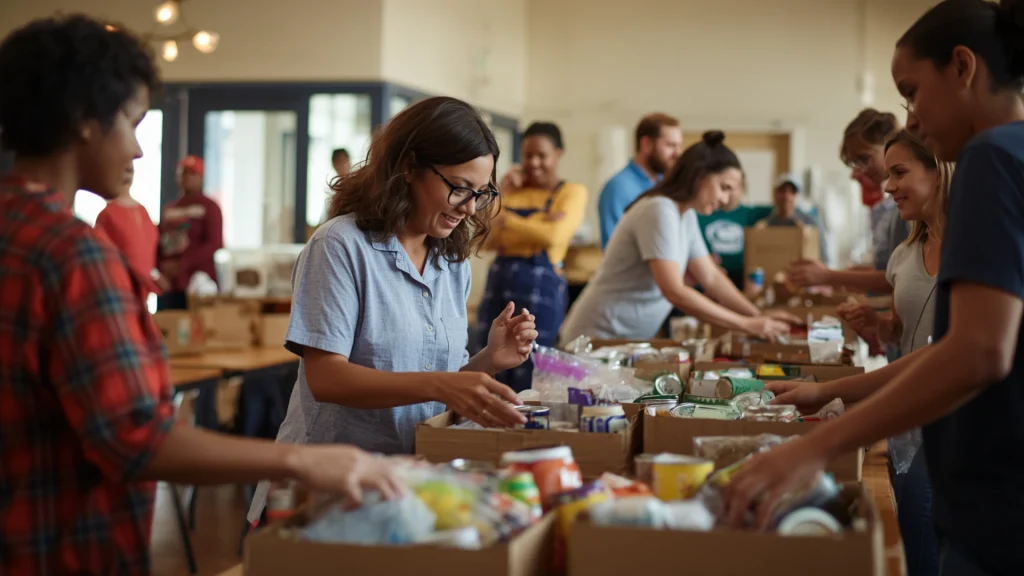
Volunteers are the foundation of many successful community initiatives. From organizing donations and sorting food to assisting at events, distributing resources, supporting administrative tasks, and helping with outreach, volunteers provide valuable time and energy that allows organizations to serve more people.
Volunteering does not have to require a major time commitment. A few hours at a food drive, helping organize a community collection, volunteering with a local nonprofit, or participating in a seasonal initiative can all provide meaningful support. For businesses, employee volunteer programs can also give teams an opportunity to work together while contributing to the communities where they live and work.
Beyond the immediate impact, volunteering can help people better understand the needs within their own communities. Working directly with local organizations can provide a clearer picture of the challenges families face and help volunteers discover additional ways they can contribute throughout the year.
Supporting Families Beyond Food
Access to nutritious food is essential, but food insecurity is often connected to broader economic and social challenges. Families may also need access to employment resources, housing assistance, transportation, educational programs, financial support, healthcare services, or other community resources.
That is why many organizations take a broader approach to supporting individuals and families. Connecting people with additional programs and services can help address some of the circumstances that contribute to food insecurity and create pathways toward greater stability and self-sufficiency.
Organizations such as Connecticut Foodshare demonstrate how coordinated community efforts can help address hunger and connect people with food assistance throughout the year. Their work also highlights the importance of partnerships between nonprofit organizations, businesses, volunteers, donors, and community members.
Businesses Can Make a Difference
Local businesses have a unique opportunity to contribute to the communities that support them. Community involvement can take many forms, including sponsoring nonprofit programs, organizing employee volunteer opportunities, hosting food drives, making in-kind donations, supporting fundraising campaigns, or helping promote local initiatives.
Businesses can also use their existing resources and relationships to amplify community efforts. A company may have an established customer base, communication channels, employees who want to volunteer, or relationships with other local organizations. When those resources are intentionally used to support a community initiative, they can help an organization expand its reach and connect with more people.
Community involvement can also become part of a company’s culture. Encouraging employees to participate in volunteer opportunities and charitable initiatives creates opportunities for teams to work together outside of their normal responsibilities while reinforcing a shared commitment to giving back.
Making Food Drives More Meaningful
Food drives are one of the most accessible ways for individuals, families, schools, businesses, and community organizations to respond to food insecurity. A collection box in a workplace or community center can turn small individual contributions into a substantial donation.
While traditional food drives often focus on collecting nonperishable items, organizers can also work with local food assistance organizations to understand which products are most needed. Shelf-stable proteins, canned fruits and vegetables, grains, breakfast foods, and other nutritious staples can help provide families with greater variety and flexibility.
Grocery store gift cards can also offer an important form of support by giving families the ability to purchase items that best meet their individual needs. Before organizing a collection, reaching out to the benefiting organization can help ensure donations are useful, appropriate, and aligned with current needs.
Raising Awareness Matters
Not everyone is in a position to make a financial contribution or volunteer regularly, but nearly everyone can help spread awareness. Sharing information about food assistance programs, local nonprofits, volunteer opportunities, and community campaigns can help connect people with resources they may not know are available.
Social media, email newsletters, community websites, workplace communications, and conversations with friends and neighbors can all help amplify important information. A single shared post may reach someone who needs assistance, introduce a new volunteer to an organization, or encourage another person to make a donation.
Awareness also helps communities better understand that food insecurity is not limited to a particular season. While Thanksgiving and the holiday season often bring increased attention to hunger, the need for food assistance continues throughout the year.
Creating Lasting Community Impact
Addressing food insecurity is not something that can be accomplished through one event, one donation, or one organization. Lasting impact comes from continued community involvement and a willingness to work together over time.
That may mean a nonprofit building new partnerships, a business organizing an annual food drive, a family volunteering together, a school teaching students about community service, or a neighbor sharing information about available resources. Each action may seem small on its own, but together these efforts can strengthen the network of support available to local families.
The most effective community action begins with understanding that everyone has something to contribute. Time, resources, professional expertise, connections, awareness, and simple acts of generosity can all play a role.
Building Stronger Communities Together
Every community faces challenges, but communities also have tremendous capacity to respond when people work together. Food insecurity can be addressed more effectively when organizations share resources, businesses engage their employees and customers, volunteers give their time, and residents remain aware of the needs around them.
You do not have to do everything to make a difference. Start with what is manageable. Volunteer when you can. Donate when you are able. Participate in a local food drive. Support an organization doing meaningful work. Encourage your workplace or community group to get involved. Share information that could help someone find the resources they need.
When individual acts of generosity come together, they become something much larger. Community partnerships can strengthen local organizations, expand access to resources, support families during difficult times, and create stronger connections between neighbors.
Building a stronger community is an ongoing effort. When we work together, we can help ensure that our neighbors have access to the food, resources, and support they need—not just during the holiday season, but throughout the year.

Thanksgiving Lift is made possible by the support of our community partners, local businesses, volunteers, and donors who share a commitment to helping neighbors in need.